Monday, 3 September 2007

Specialty Gardening

Not enough land for your dream garden? Don’t be too sure. Ever think about vertical planting? Or perhaps a little creative container gardening suits your style. It seems yards are getting smaller and smaller in many areas, yet gardening is becoming an ever more popular hobby. Even functional retaining walls can contain space thrifty gardens.

Luckily, plants care about proper soil, good nutrients, temperature, lighting and drainage. They really don’t care exactly what they are planted in, or the methods used to meet their needs. You can create a really striking one-of-a-kind landscape without much money by thinking outside the box when garden planning.

Vertical gardening can involve the use of light framing, twine, wire, netting, or even hanging baskets installed at a few different levels. Twining plants around a simple post can give you several feet of fruits, herbs, vegetables, or flowers in the area of a foot or two. Arched trellis groupings can make a dramatic statement and greatly increase the planting areas in a small space. And even a scrub bush or small tree might be used to support and train planting arrangements for a few seasons. Hide the plain with some pretty!

Container gardening is just what it sounds like. Raising plants in containers rather than the traditional plot of ground. You can group several plants in one container, and several containers together to make modular gardens that are easier to move and arrange as plants and seasons change.

Raised bed and square foot gardening are similar in that several plants are placed in a confined area of soil, usually raised or terraced slightly so that many more plants can happily occupy a smaller area. Some back to basic folks even grow by simply slitting an opening in bags of soil they bought at a landscaping store and stacking them. They plant the seeds and water right into the bag after making drain holes.

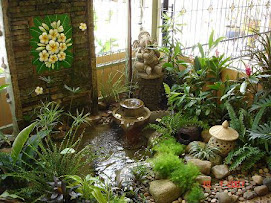
Water gardening evokes a stress-chasing, relaxing atmosphere. This elaborate type of landscaping can liven up dull, tired yards. Water gardens can include fish and other small creatures, or just plants. Some folks like to try to grow plants of species that normally don’t grow easily in their type of climate. Tropical plants are especially good with landscaped water features.

You can always fall back on the good old standby... the greenhouse! Or maybe indoor gardening, perhaps with a hydroponic garden. Start looking around with your gardening and landscaping projects in mind and use your imagination to see what you and others have lying around that you can use to make your own unique specialty garden.

For gardening and landscaping resources and great advice visit www.gardeningresults.com/blog

Article source : http://www.amazines.com/

Landscaping with Perennials

Adding some color to your landscaping is easy with perennials and biennials. These are flowering plants that come in a wide variety of colors and shapes.

Perennials are plants that come each year if given good care. The color is less brilliant than annuals, which have to be replanted each year, but they are still beautiful. Biennials are different in that they bloom every other year.

Perennials come in colors such as purples, oranges, yellows, pinks and blues. There are perennials plants that have large flowers, very tiny flowers, and no flowers. They all add variety to any garden. For instance, non-flowering perennials can be used among bright annuals to separate colors. The possibilities are endless.

Perennials include foxgloves, hostas, thyme, sage, irises and bougainvillea bushes. Each of these adds a different effect to your landscaping.

Foxgloves have long rows of pale pink or orange bell-shaped flowers with a thick green stalk. They give any garden variety in shape and height.

Hostas have beautiful white flowers. Like the foxgloves they are easy to care for. They need very little water and do very well planted in partial shade.

In the Fall when the blooms die simply cut off the dead leaves at ground level and they will be ready for the following Spring.

If you need a ground cover, Thyme is a great choice. It requires almost no work. Sage, too, can be used. It adds a nice light green color to the garden and a beautiful fragrance as well.

Bougainvillea bushes can be used in a number of different zones, included the hotter areas of California and the cold winters or the Northwest. They come in different colors, are easy to care for, and are drought tolerant.

Irises have a lovely, large yellow flower on a tall green stalk that comes back year after year. These lovely plants require very little care. A little pull once in a while to tug off the dead, wilted flowers is all it needs.

Compared to annuals the colors of the perennials are sometimes less vibrant. But when you consider that they grow year after year with very little care and work they are a great addition to your landscaping.

Tons of landscaping tips to help you create the yard of your dreams can be found at http://www.landscapingtipsonline.com


Article source : http://www.amazines.com/
Gardening in a Limited Space

It is totally possible to have fresh food you grew yourself, even if you live in a mobile home park with barely any un-paved earth to call your own. No, don't go digging up that tiny patch of lawn and getting yourself kicked out. I am referring to suspended container gardening.

You might be surprised at what can grow in a hanging container. Anything that doesn't need a lot of root space will do just fine. Berries such as strawberries are common for hanging planters. Tomatoes do well also, especially the light-weight cherry varieties, as do many types of lettuce and other greens.

To make the classic hanging basket, find a wire frame, metal mesh or even a solid plastic basket. Plastic pots can be used if you can safely fashion a way to hang them. You will also need a liner for any basket with holes in it. A liner needs to hold soil but drain water. Commonly used basket liner materials include sphagnum moss and coconut fibre, but you could also use a large piece of an old wool sweater. Alternatively, a black plastic bag with some small holes poked in it a few inches above the bottom will do the trick.

You will want to find a nutrient rich soil, preferably a fresh compost. The more concentrated the nutrients the better, as yield and quality of food will be higher. Also, since a container can dry out fast in a hot climate, adding water-retentive granules can be a good idea. These swell up upon watering and release their moisture slowly.

For multiple layers of plantings in a wire-frame or otherwise well perforated basket, fill your container part way with soil and then add seedlings of trailing fruits such as strawberries, tomatoes and small squash and cucumber varieties. Lay a few of these sideways, in alternating directions, with their roots across the surface of the soil and their above-ground parts coming out the side of the basket. More holes may need to be made in any plastic or wool liners to allow the plant to come out. Cover more soil over the roots, filling it to a few inches below the top of the basket. You can now plant another layer of trailing plants, or something that grows upright, such as lettuce, kale or basil. Even carrots could be planted here if the basket is deep enough.

Lettuce can also be planted so that it comes out of the sides of the basket, and can be planted quite densely. Harvest the largest leaves as desired, leaving the plant intact to continue growing.

Hanging gardens are also an excellent way to have fresh herbs and spices on hand. Almost any herb can be planted in one. Try oregano, rosemary, thyme or tarragon. Basil is an herb that will need to be re-planted each year, but the other varieties I mentioned should come back every spring, and even, as is the case with rosemary, provide usable leaves all year long in moderate climates.

Nelson Stewart is a representative of the best Gated Community in Arizona. The Palm Gardens Arizona 55 Community Come visit our site and see what the best in senior living can be Contact us anytime or visit us online at http://www.palmgardensonline.com

Article source : http://www.amazines.com/

More on Container Gardening

Previously I wrote about having hanging baskets full of edibles as a way to enjoy gardening in a limited space such as a mobile home park, or even an apartment balcony. Here are a few more ideas for those with green thumbs.

I recently met someone who makes very unique hanging gardens. He sews burlap into a long tube, inserts a thick piece of wire about 5 or 6 inches longer than the tube and then fills the burlap tube with dirt. The wire must be bendable, but not so soft that it will lose its shape. Poke it out the bottom of the tube slightly, and bend it at a tight angle to act as an anchor. Form the top of the wire into a loop which can then be fastened to a hook and hung. These tubes of earth can be bent into coils or curves in whatever way that suits your amusement, or just left long and straight.

Plant anything in your hanging tube: strawberries, lettuce, tomatoes and basil are all suggestions I've made before. Another idea is edible flowers. Nasturtium with leaves and flowers which are both edible, is quite peppery, A bonus of nasturtium is it grows on a long vine, making it perfect for the hanging container. For a mild and sweet edible flower try pansy, or the cucumber tasting borage. All of these are easy to grow from seed.

To plant your hanging garden tube, just cut very small holes in the burlap with scissors. Seeds can be pressed right into the vertical surface of the soil. If you wish to plant seedlings, you will want to prepare the holes in the tube ahead of time and insert the plants as you fill the tube with soil.

Adding a slow-release fertilizer will help your densely packed plants thrive in such a small amount of soil. This burlap tube method of hanging garden will need to be watered often to prevent it from drying out, as it is such a small volume of soil. A water-retaining substance added to the soil can help maintain moisture, but too much compromises the nutrient levels as it takes away from the quantity of soil. A liquid fertilizer could counter-act this affect, being effectively held in the water-retentive soil additive

Of course all of these planting ideas can be used for on-the-ground container gardening, too. In fact, a combination of both ground and hanging containers could make any porch or balcony a lush oasis. The addition of edibles adds to the rewards.

Nelson Stewart is a representative of the best Gated Community in Arizona. The Palm Gardens Arizona 55 Community Come visit our site and see what the best in senior living can be Contact us anytime or visit us online at http://www.palmgardensonline.com

Article source : http://www.amazines.com/


Thailand water garden.